
I released my book about the birth rate!
Free to download here
https://docsend.com/view/wc528tqgeti6s6v8
By Daniel Hess
This essay is part of a series of policy essays exploring ways to raise birthrates.
Married people tend to be a lot happier than unmarried people. The wealth gap between married and unmarried people is enormous. Those who are married are healthier by most measures and live longer. And these benefits accrue to both men and women. There is a lot of evidence that marriage causes all these good things.
Meanwhile, society depends utterly on marriage, because the vast majority of children born via marriage, and the vast majority of people prefer to have children within marriage.
Marriage isn’t for everyone, and tons of wonderful families exist without it. But marriage is still the dominant way that people have kids, and evidence suggests that marriage matters more, not less, than before.
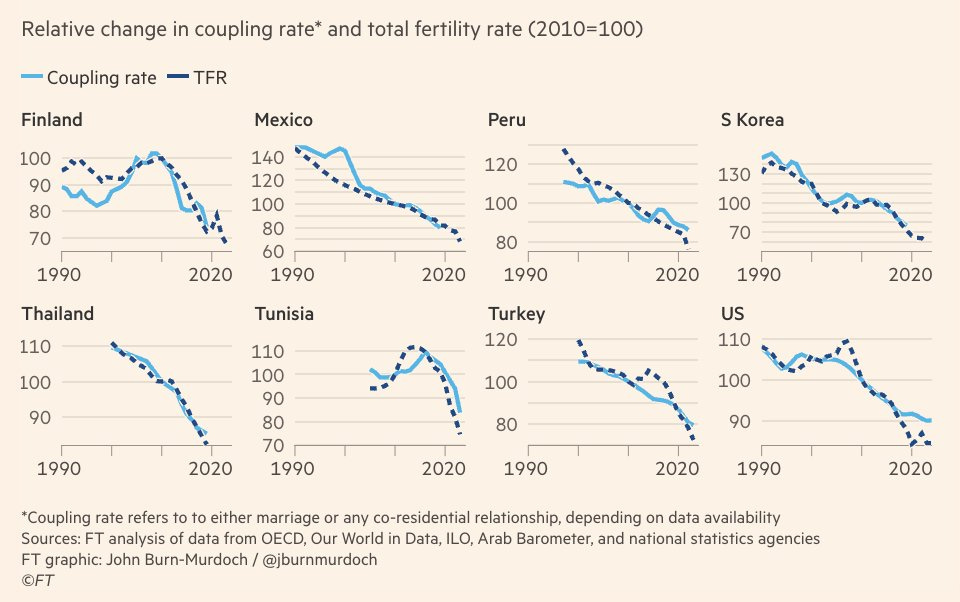
Yet we hardly sell it, and so fewer and fewer people choose it. And birthrates follow marriage right down, all over the world, imperiling our future.
Married people are happier, healthier and richer
Lots of marriages don’t work out, and divorces can be a mess. Plenty of marriages are miserable. Yet despite what the red pill right and the feminist left will tell you, the benefits of marriage -- on average -- are astoundingly high for both sexes.
Happiness
Surveys almost invariably show that married people are happier than unmarried people. Skeptics claim that’s just because happy, well-adjusted people are the ones getting married. But we can see what happens to the happiness of people as they transition into and out of marriage.
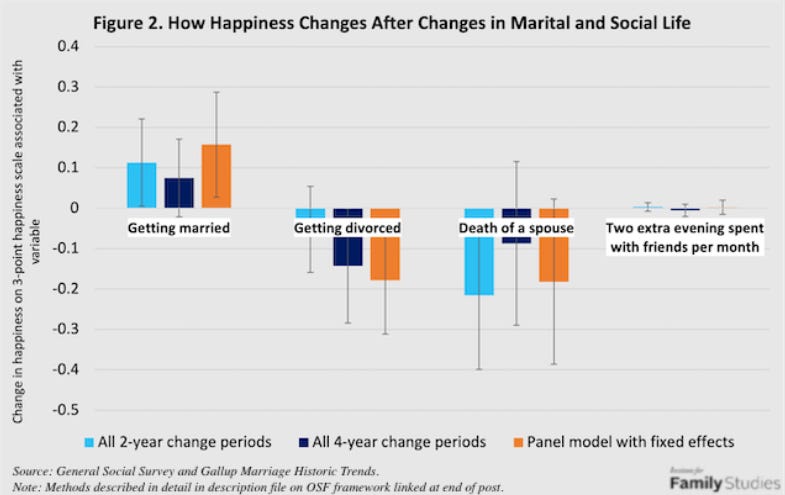
It turns out that getting married actually makes people a lot happier. Getting divorced makes people very unhappy, but that is a pretty strong clue that they liked being married.
But that just for men, right? No! The marital happiness advantage is just as large for women as for men, and it has been increasing over time!
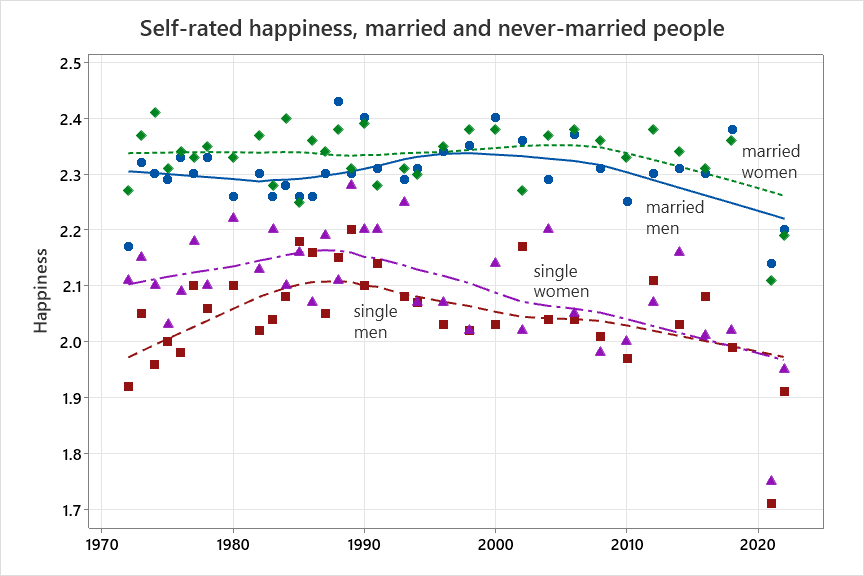
Researcher Tomas Pueyo summarized, “Both men and women are way happier when married than single, and that appears to be true in every paper I could lay my hands on.”
Health and long life
Married people are far likelier to be in good health than singles at the same age. But does marriage cause better health? It sure looks like it. Married and single people start with similar health, but the longer they are married, the larger the health gap becomes. Why? For one thing, married people tend to engage in much more preventative care, often because of the prodding of their partner.
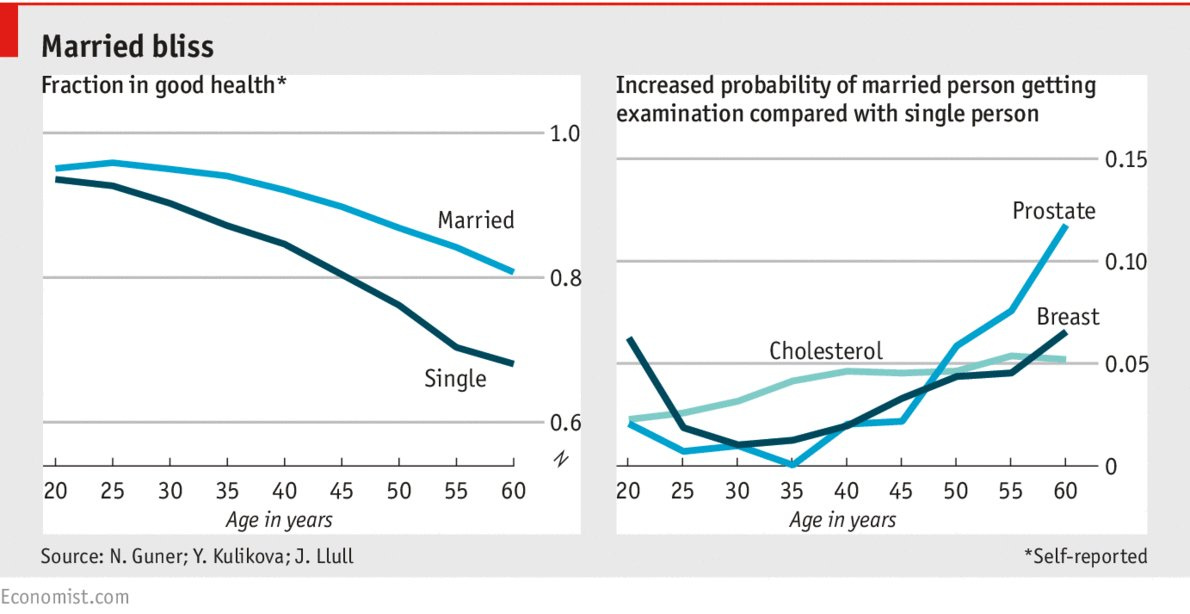
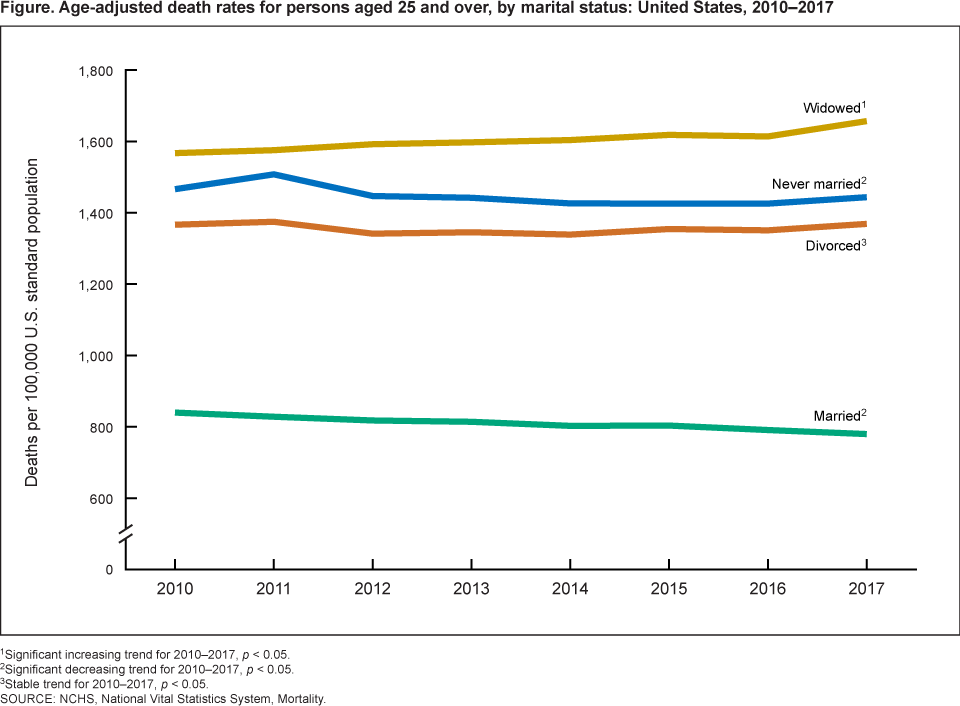
As a result, the mortality gap between married and unmarried people is enormous.
Wealth
There is a large wealth gap between married and single people. Married people of all ages have many multiples of the wealth of singles.
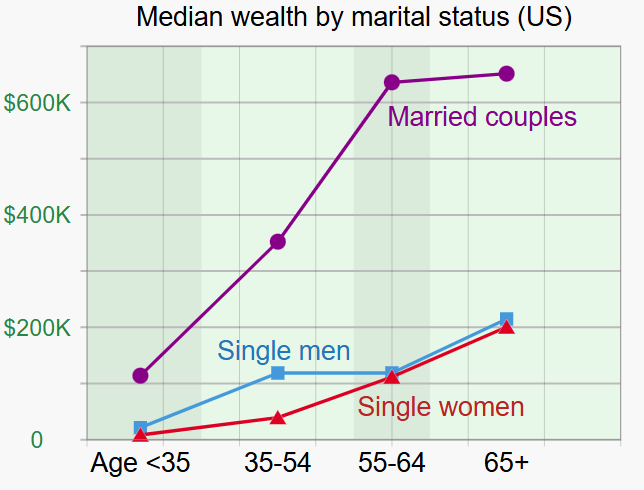
Is some of this due to selection? Sure. People who have money are more likely to get married in the first place.
But also, one household is cheaper than two, and a lifetime of having another person to help with childcare and home maintenance instead of hiring out adds up. You also save a lot on leisure when you can just spend time with a significant other for free.
Marriage matters more for fertility than before
Nowadays people have children in a wide variety of family forms, so why even talk about marriage? Not only don’t you need to be married to have children, with IVF and surrogacy you don’t even need to have a partner.
But in the last decade or two a funny thing has happened as birthrates have fallen to record lows. Fertility outside of marriage has been falling while fertility inside of marriage has stayed high. Why?
A lot of births outside of marriage were unintended, and with improved birth control people are getting better at avoiding them. That means society now relies even more on marriage to have children.
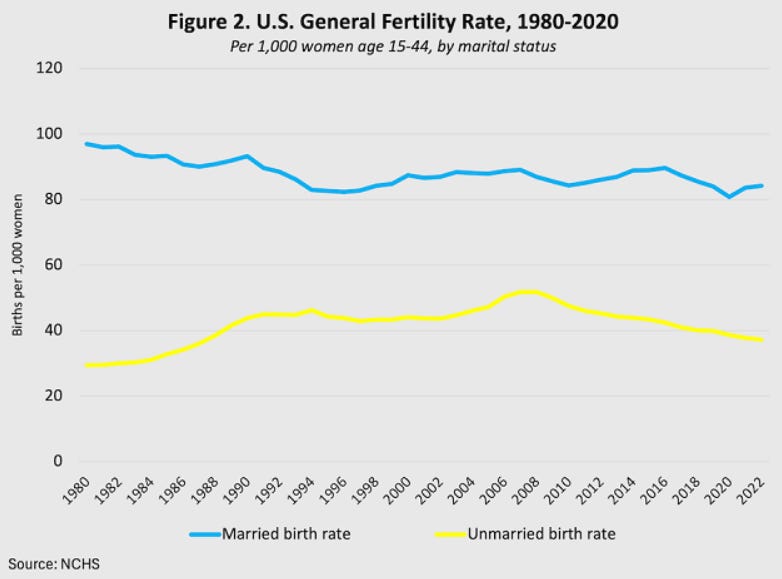
Whatever people may say about marriage, they are voting through their behavior. Since 2008, married women in the US went from having 1.7 times the birth rate of unmarried women to 2.2 times.
All over the world, marriage is still the commonest path for people to have kids
For all of the lifestyle options now on offer, the ancient institution of marriage still accounts for the vast majority of births in all but a handful of countries.
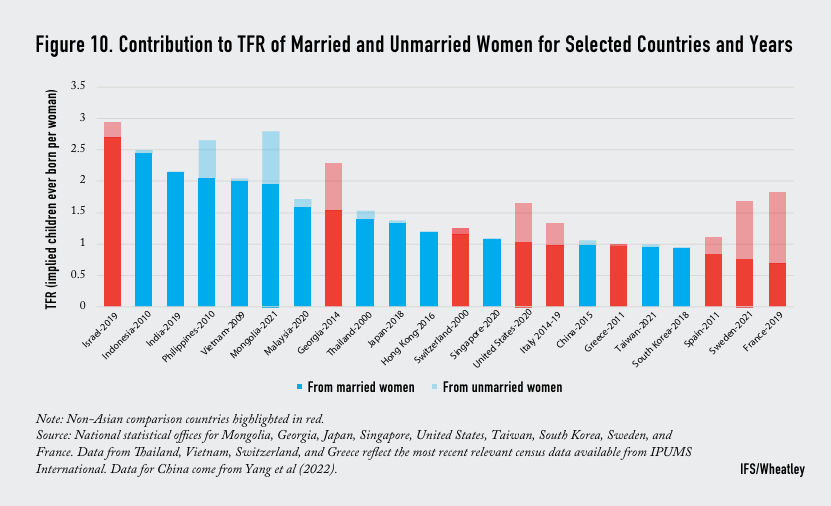
To be fair, the unmarried share is an important contributor to fertility as well, especially in the US and Europe. I have argued that to solve the birthrate crisis, we need big tent pronatalism, and conservatives often make the mistake of having a too-narrow concept of family.
But if you want a society with a healthy birthrate, it’s hard to do so without marriage.
No country gets to replacement without a decent marriage rate
Using data from The Economist and National Reporting Agencies, I plotted the marriage rate and the fertility rate for about 90 countries with available data. Countries with high marriage rates had about double the fertility of countries with low marriage rates.
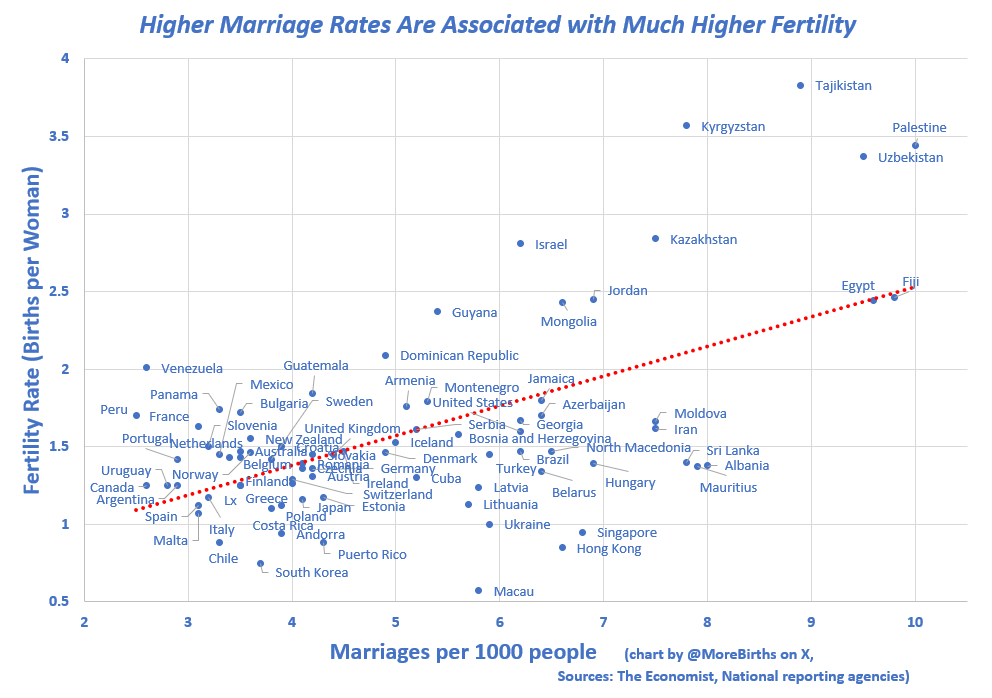
Remarkably, no country with a low marriage rate (below 5 marriages per 1000 per year) manages to reach replacement fertility.
Until recently, France and the Scandinavian countries seemed to hint that you don’t need a marriage culture to have a healthy birthrate. But France’s TFR now sits at 1.58 and Nordic Europe is lower still.
Most of the Declining Fertility is Due to Declining Marriage
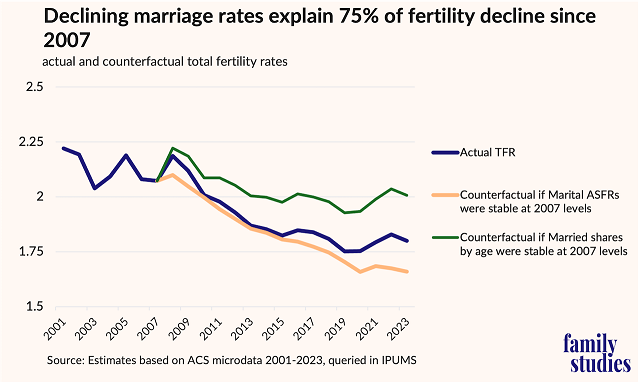
The Institute for Family Studies asked, how much of the recent decline in US fertility is because of falling marriage rates? The answer? 75% of it!
If people married at the same rate that they did in 2007, fertility would be very close to replacement.
Earlier marriage is the key
But marriage doesn’t lead to higher birthrates if folks are marrying too late. Works In Progress had a great piece in September 2023 exploring the causes of the postwar Baby Boom and the best explanation they found is higher rates of young (under 25) marriage.
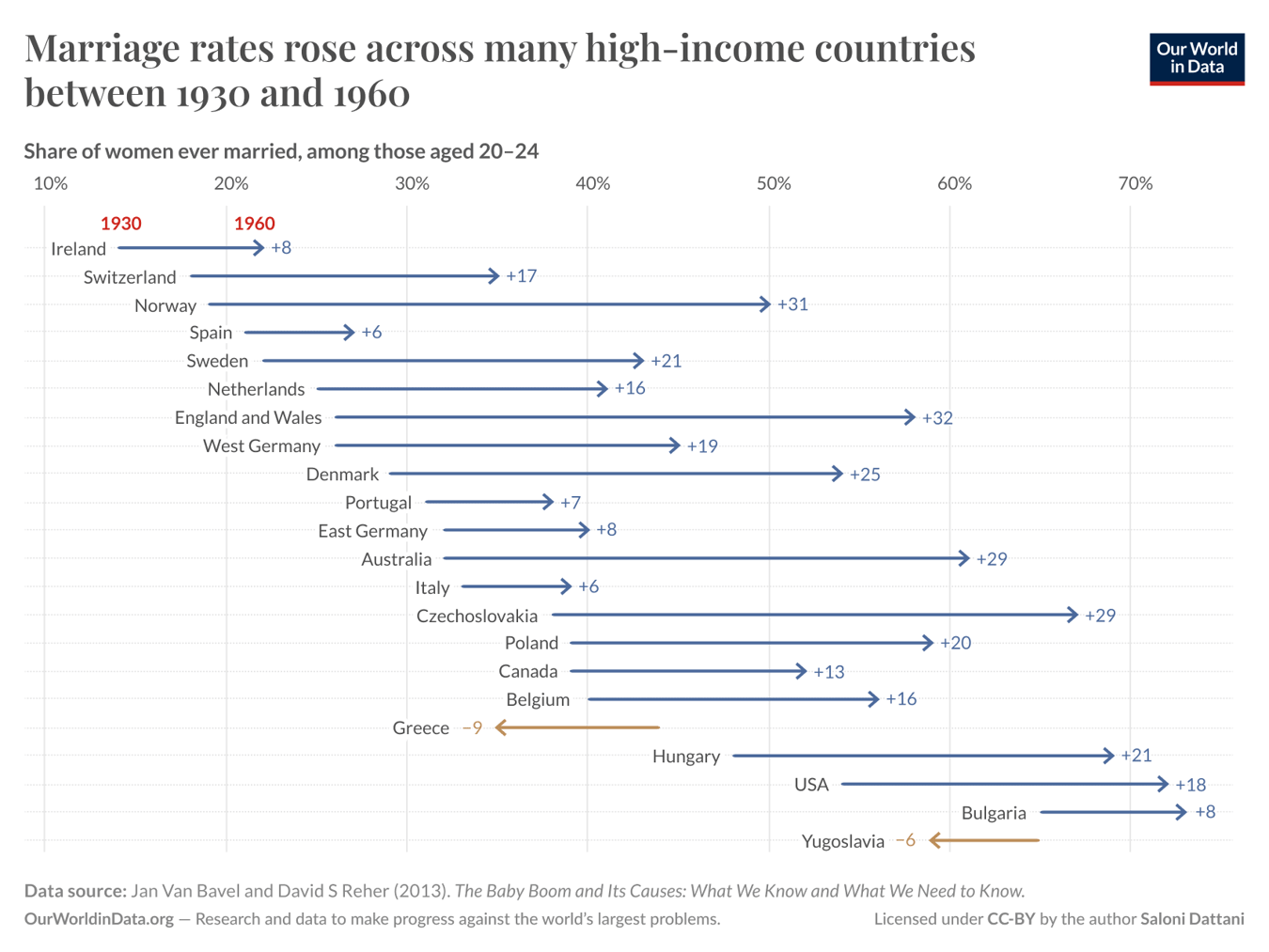
At the height of the baby boom, more than 70% of American women age 20-24 and nearly 60% of British women of these ages were married. A generation before, it was just around 50% of American women and only 25% of British women.
How much of a difference does earlier marriage make?
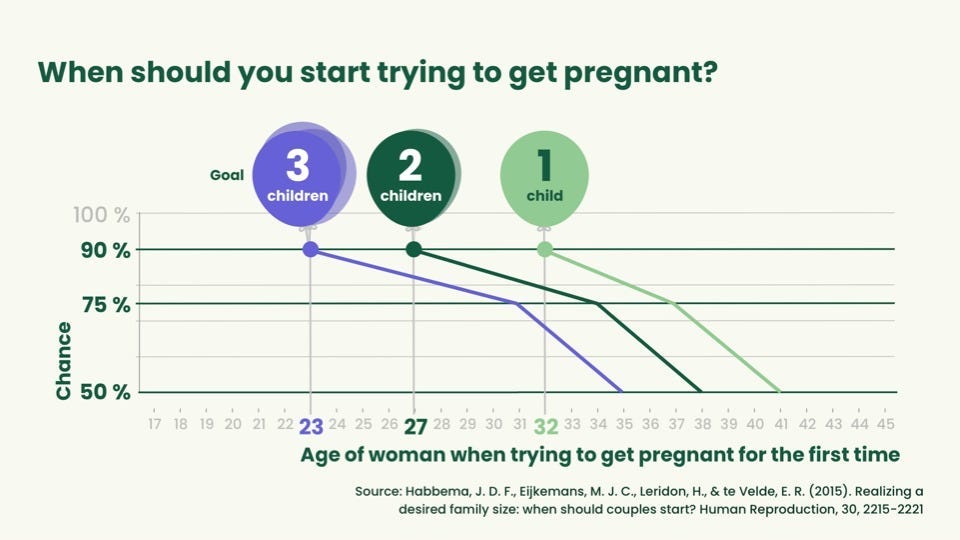
In 2023 a team from the University of Texas at Austin (funded by vocal pronatalist Elon Musk) studied human fecundability (the odds of becoming pregnant when you are trying) using a global dataset of three million women. It turns out that women are incredibly fecund in their early 20s, and then the ability to get pregnant declines throughout the 20s and 30s.
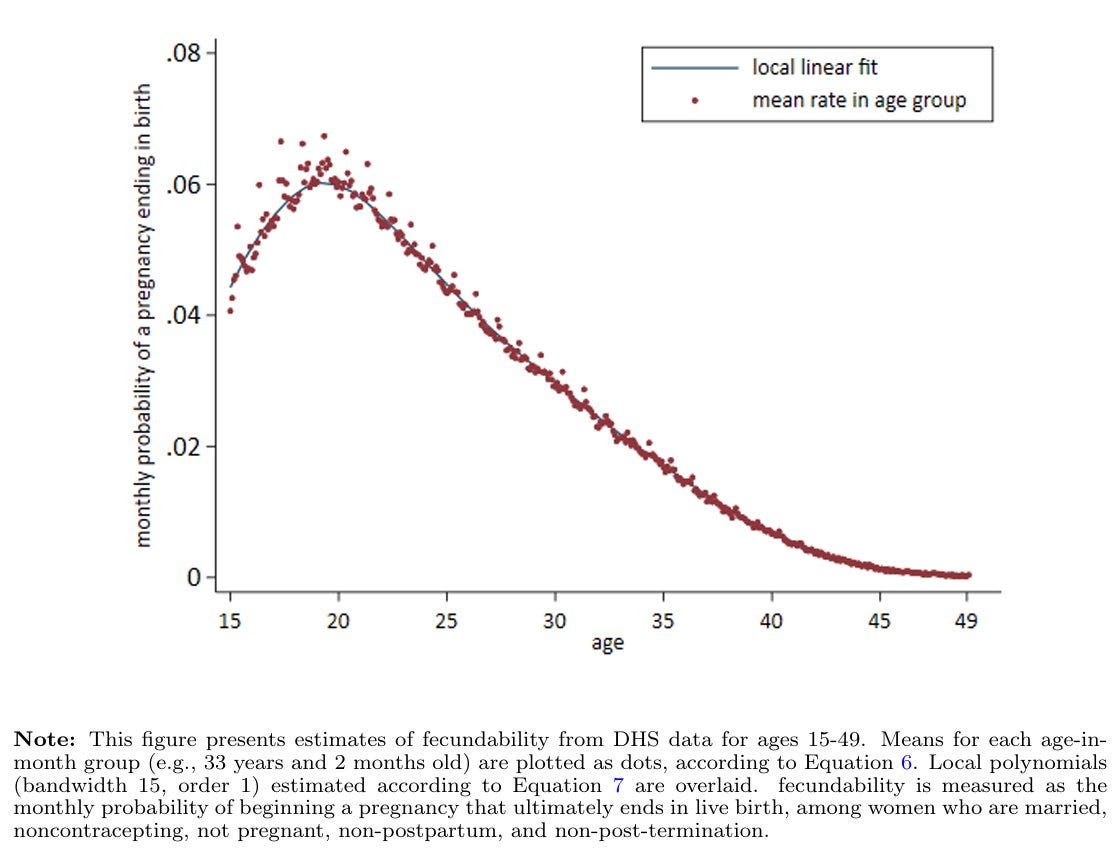
When you see it, it is so obvious. Not only do women who marry earlier have more time to have a bigger family, but their marriages have much better overlap with the most fecund ages.
Look at that curve again and consider that in Mediterranean Europe the average age that women marry is now 35. Is it any wonder that they have among the lowest birthrates in the world?
Cornerstone versus Capstone
University of Virginia professor and family policy expert Brad Wilcox talks of two different models for marriage.
Cornerstone, or foundational, marriage is the type of marriage that was most common historically. Couples marry early in adulthood (for example, during college or within a few years of graduation) and then build their lives together.
Capstone marriage, on the other hand is much more the norm today. Couples marry later, typically in their 30s or beyond, after putting a lot of things first. As one pundit explained, “modern young adults tend to view marriage as a capstone - you get your education, have a bunch of sex, establish a career, cohabit, maybe even buy a house ... and only then get married. And all of that takes time.”
Late capstone marriages wreak havoc on fertility. Remember that fecundability chart. Cornerstone marriages leave a lot more runway for having kids, and you need to start early to have the best odds, especially if you want more than one or two.
Fear of Divorce Hurts Birthrates
If marriage is good for birthrates, then divorce must be bad for birthrates, right? Yes, and there are studies that show it.
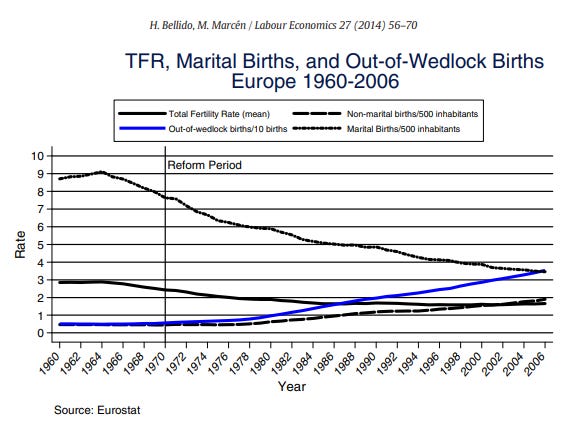
A 2014 paper by Bellido et al. found that “the introduction of more liberal divorce laws permanently reduces the value of marriage relative to divorce. Results suggest that divorce liberalization has a negative and permanent effect on fertility.”
A state-by-state study in the United States (Alesina et al. 2007) found the same thing, that rising divorce drives fertility down, both because marriages don’t last as long and because some people are afraid to get married at all.
But fears of divorce are overblown
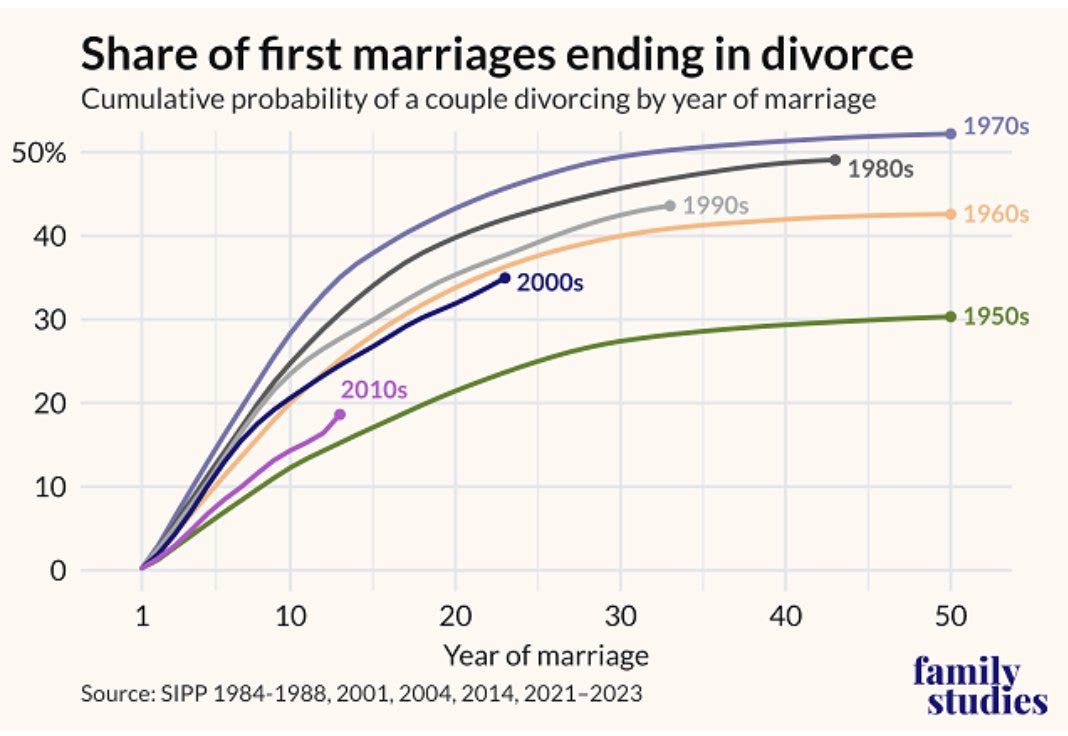
Many men avoid marriage out of fear of divorce and a lot of influencers feed these fears. But the odds of divorce have gotten lower and lower with every generation since the 1970s. Those married in the 2010s get divorced at only half the rate of their boomer parents. In fact, the divorce rate for new marriages is barely higher than it was for people married in the 1950s!
But even marriages that end in divorce are usually still worthwhile. I count among my friends a number of people who got divorced, and none would wish away the kids that came out of their marriages. Most have much richer lives than those who stayed forever single.
Polyamory is associated with especially low fertility
Internet personality @Aella_Girl did a huge survey of 23,000 people in 2023, asking people how many children they have with their partner and whether they are polygamous. She found that the fertility of poly respondents is very low even though they married at similar rates.
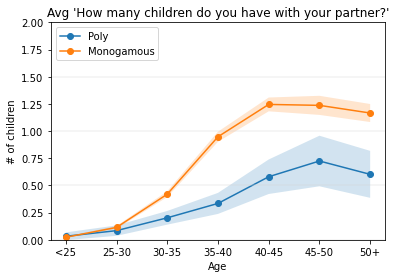
It seems that those who have a traditional view of sex and marriage tend to have a lot more children.
Israel, East Asia and Matchmaking
Traveling around the world to document the low birthrate crisis, filmmaker Stephen J. Shaw found that the vast majority of the childless actually do want kids. The number one reason they don’t have them? They haven’t yet found the right partner. The most common way people meet these days is through dating apps, but most dating apps make things worse, not better, for finding long term relationships.
But in Israel, nearly 90% of women marry by age 40 according to the Taub Center, and this one reason why Israeli fertility is so high. What does Israel do differently?
For one thing, there is a robust culture of matchmaking, especially among the Orthodox. So much so that there is both a hit Netflix show and a blockbuster (in Israel at least) movie about it.

These shows put a modern spin on a very old tradition. All over the world, and in Asia especially, arranged marriage was the main way that families formed until very recently.
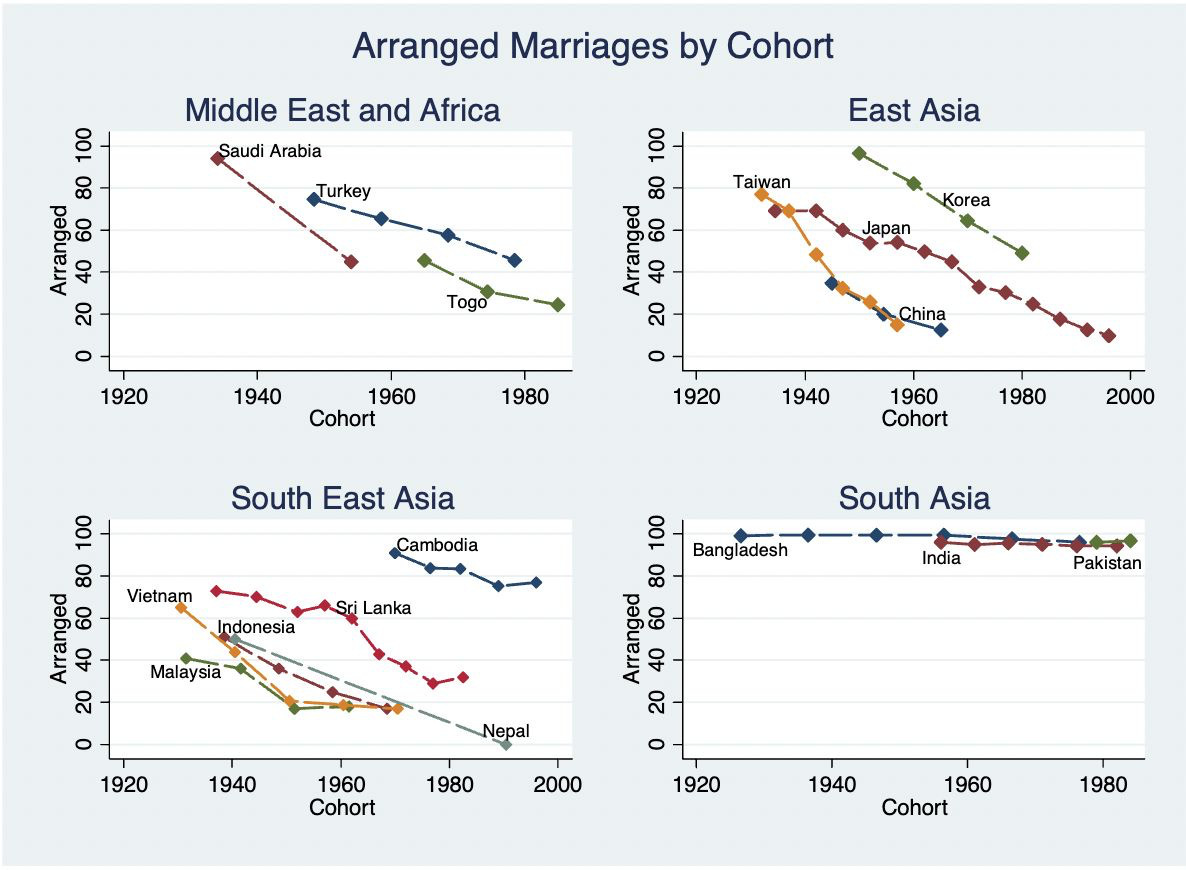
Young people are now adrift in many countries. Bringing back matchmaking might be essential for reviving fertility in East Asia and a lot of other places. We probably don’t want to see a return of the most oppressive forms of arranged marriage, but judging by these hit shows, matchmaking is something young people may want a lot more of.
What can policymakers do?
It is hard to deny that marriage drives fertility, as much today as it did in the past. But what can be done by policymakers? Isn’t marriage a private decision? Here are some ideas:
Talk up marriage. One of the most powerful tools of leaders is the public stage.
Conservative influencers already use their voice to promote marriage all the time. Liberal influencers and politicians almost never do. That helps explain why marriage and birth rates are now nearly twice as high for conservatives as for liberals
.
Favorable tax treatment for marriage. It would be bad politics to try to tax singleness. On the other hand, giving married people tax benefits is common in many countries and shifts culture toward marriage and more children.
Religious freedom. The cultural norms around marriage are mainly taught by faith groups. If such groups are permitted to thrive, more marriage and higher fertility will be the natural result.
Favor the young in policy. The United States is a gerontocracy that advantages the old in many ways, while burdening the young with taxes and inflation. Shifting the balance toward the young will boost marriage and family formation.
Reduce marriage penalties. Marriage penalties are where some couples end up paying more tax if they get married. These penalties should be reduced where possible.
Could you teach the benefits of marriage in school? Why not, since kids already get sex-ed!
It is always interesting to see the Overton Window poking its head into an otherwise sane article:
>>Marriage isn’t for everyone, and tons of wonderful families exist without it.
Solid analysis on the cornerstone vs capstone distinction. The fecundability data from the UT Austin study is pretty stark, peak fertility in early 20s and the continuous decline through 20s/30s explains why Med Europe's average marriage age of 35 correlates with some of the lowest birthrates globally. I'veseen similar patterns where timing matters way more than people realize,especialy when couples want 3+ kids.