
By Daniel Hess
This essay is part of a series of policy essays exploring ways to raise birthrates.
One of the cruelest aspects of modern life is that while the life cycle has slowed dramatically (we finish education later, we move out of the parental home later, we start making real money later and we marry later), the fertility window hasn’t budged at all.
Modern birth control has allowed us to take control of our fertility and delay having children much longer than ever before, and there are plenty of things to do with the extra years of youth, from more education to career building, travel and much more. But this delay is taking a terrible toll. Fertility rates have plunged far below replacement in nearly every developed country, and in most countries, people are falling far short of their desired fertility.
Yet teaching people about fertility early, when there is still time, could go a long way to solving this problem, both for individuals and society as a whole.
The Great Mismatch
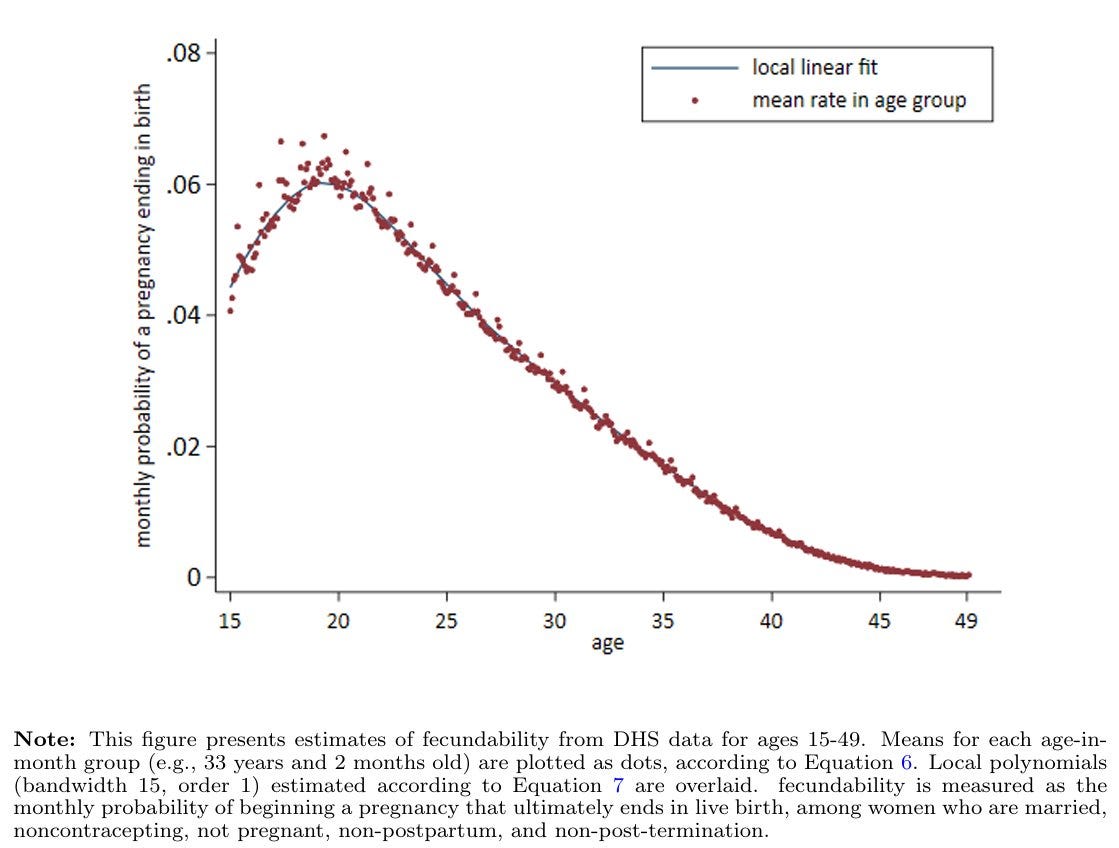
We are used to the idea that fertility drops off in the mid 30s or after 40. But in 2023 a team from the University of Texas at Austin studied human fecundability (the odds of becoming pregnant when you are trying) using a large global dataset of three million women. They found that fecundability peaks at age 20 and then declines throughout the 20s and 30s.
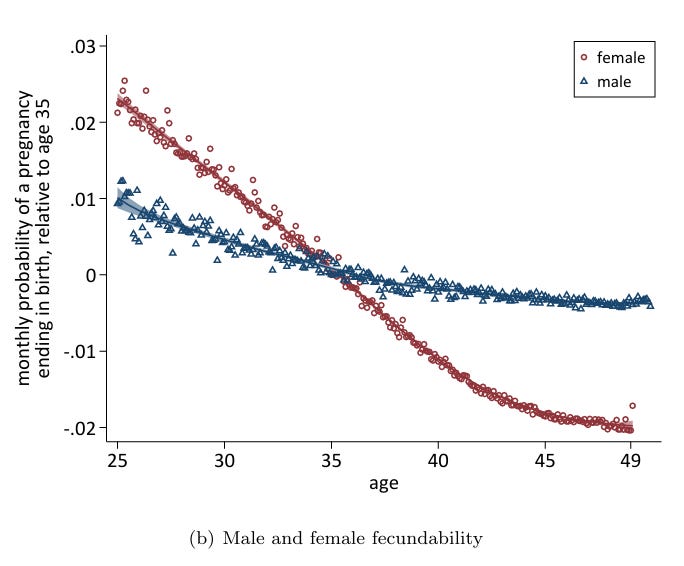
This means fertility peaks and then declines far earlier than any of us knew. By age 33, a woman is only about 1/3 as likely to get pregnant in a month of trying as she would have been at age 20, and by age 40, she is only about 10% as fecund as she was at her peak.
But how many women in developed countries are even thinking about getting pregnant before age 30? The age at first marriage has been shooting upward all over the world and is well into the 30s in many developed countries.
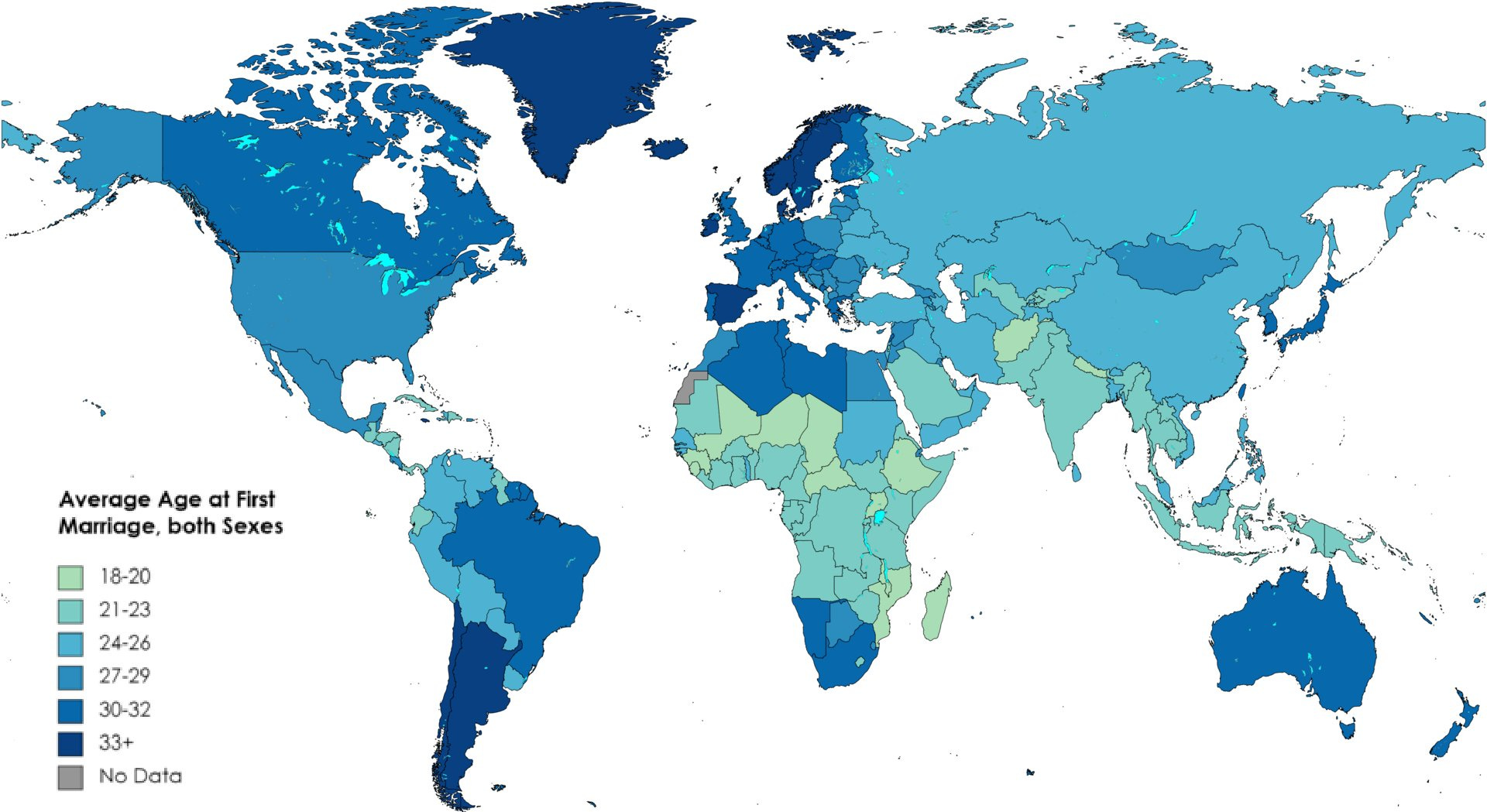
If you noticed that this map of the average age of marriage looks a lot like a global fertility map, that is no coincidence. Countries where marriage comes late as in Europe, Canada, East Asia and much of South America, almost invariably have very low birthrates.
Another important paper, presented in 2024, considered ‘fertility realizability’ which is ‘the ratio of total fertility to average desired fertility.’ Fertility realizability measures how well people are able to realize their fertility goals.
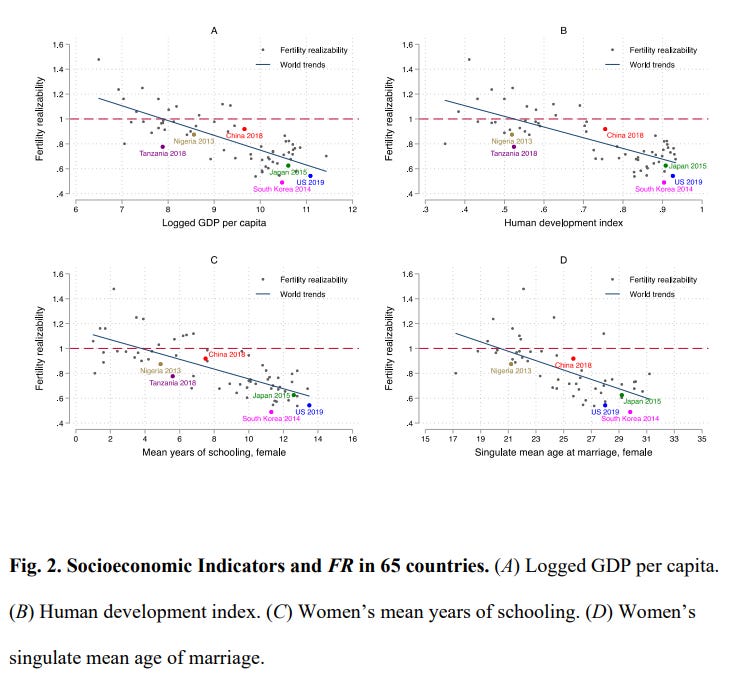
As countries get richer, as the human development index increased, as years of schooling rose and as marriage age rose, people were much less likely to realize their fertility goals.
The fertility crisis is not simply about women not wanting kids anymore. They do want them! But long educations and late marriages mean most people miss their most fertile years and many miss the window entirely.
Delays Cannot be Made Up
An amazing birth chart was produced last year by Yale economics professor Paul Goldsmith Pinkham. It is a plot of childbearing by age in the US, for the years 2001 to 2022. During that time, the total fertility rate went from 2.03 to 1.62, a huge decline even though desired fertility didn’t go down at all. The total fertility is proportional to the area under the curve for that year.
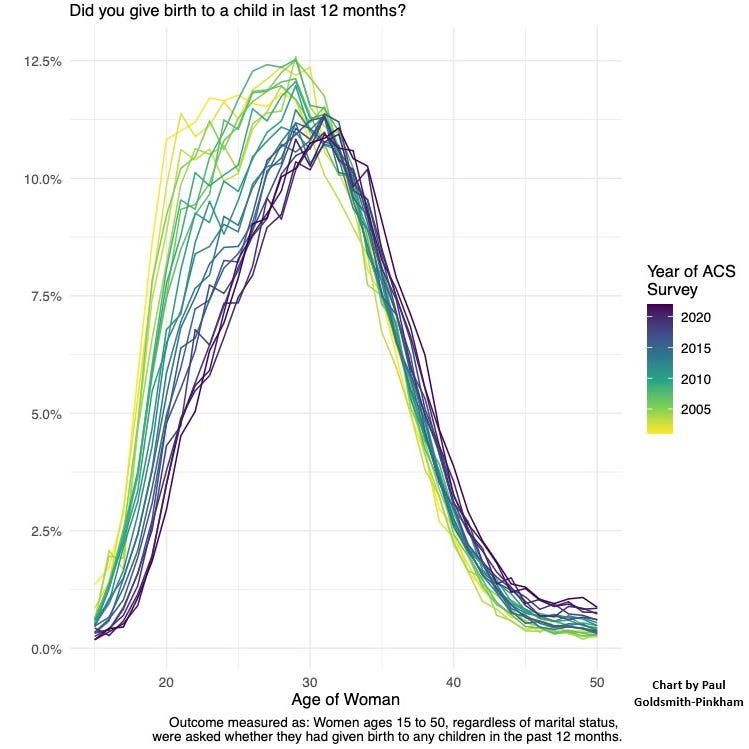
What happened? Since 2001, there has been a massive shift toward later childbearing. In 2000, childbearing was high throughout the 20s, dropped off sharply throughout the 30s and was very low by the 40s.
By 2022, the left part of the curve had moved far to the right. Childbearing was much lower throughout the 20s, only catching up by the early 30s. But then childbearing fell off sharply in the 30s, following the same pattern as before.
In other words, delayed fertility could not be made up. Even though women’s plans have changed a lot, physical fertility limits have hardly changed at all. (American women in 2022 had an ideal fertility that is almost a whole child more than actual fertility, 2.5 vs. 1.6). Think about what this means! Birthrates, now much too low, would likely be quite a lot higher if women weren’t running out of time.
Long Educations Consume the Fertile Years
One of the most robust findings in demography, both in the United States and around the world, is that more education means lower fertility. Among women who had finished having children in 2016, the difference in the number of children between the most and least educated women was 1.2.
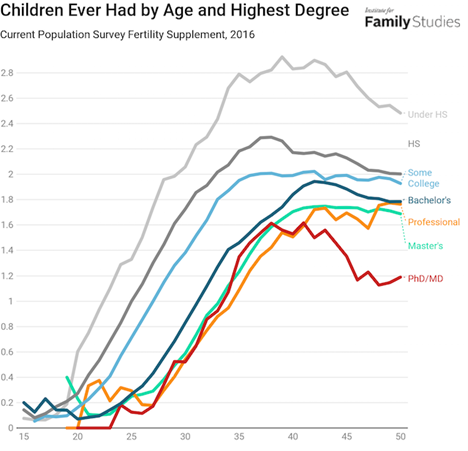
Most people think that’s because people go to college and get indoctrinated into not having children. Maybe that happens sometimes, but that’s not the main reason why more educated women have fewer children.
The main reason is much simpler. People don’t usually have kids while they are enrolled in school and almost everyone waits until they have graduated before trying.
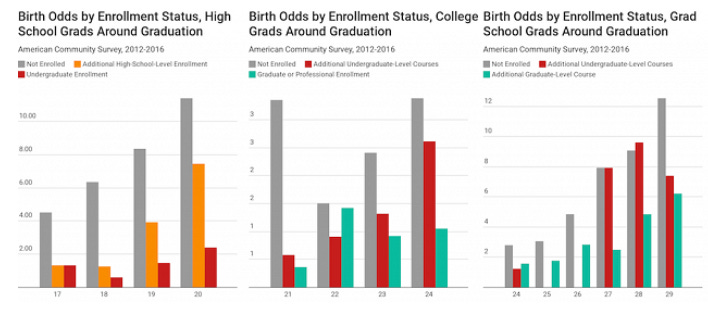
If school consumes most of the 20s, there will be a lot less time to have children and fecundability will be a lot lower by then. If a woman takes until age 33 to complete her PhD, she probably won’t try for kids until after that’s all done, and maybe not even then if marriage and career are still being figured out. Will she still be fertile after all that?
And by the way, age limits the fertility of men almost as much as women. The overwhelming majority of men are partnered with women similar in age to themselves, so the odds fatherhood drop off almost as steeply as the odds of motherhood.
Late Marriage Explains Most of the Fertility Decline in Rich Countries
Fertility plummets as countries advance, and that is a mystery to most people. We hear things like “Humans can’t breed in captivity” or “People won’t have kids unless they are poor.”
But actually, delays can explain most of the rich-country fertility collapse. There is not a single country with an average age at first marriage age above 30 that is above replacement, but most countries with an average age at marriage of 25 or lower are above replacement.
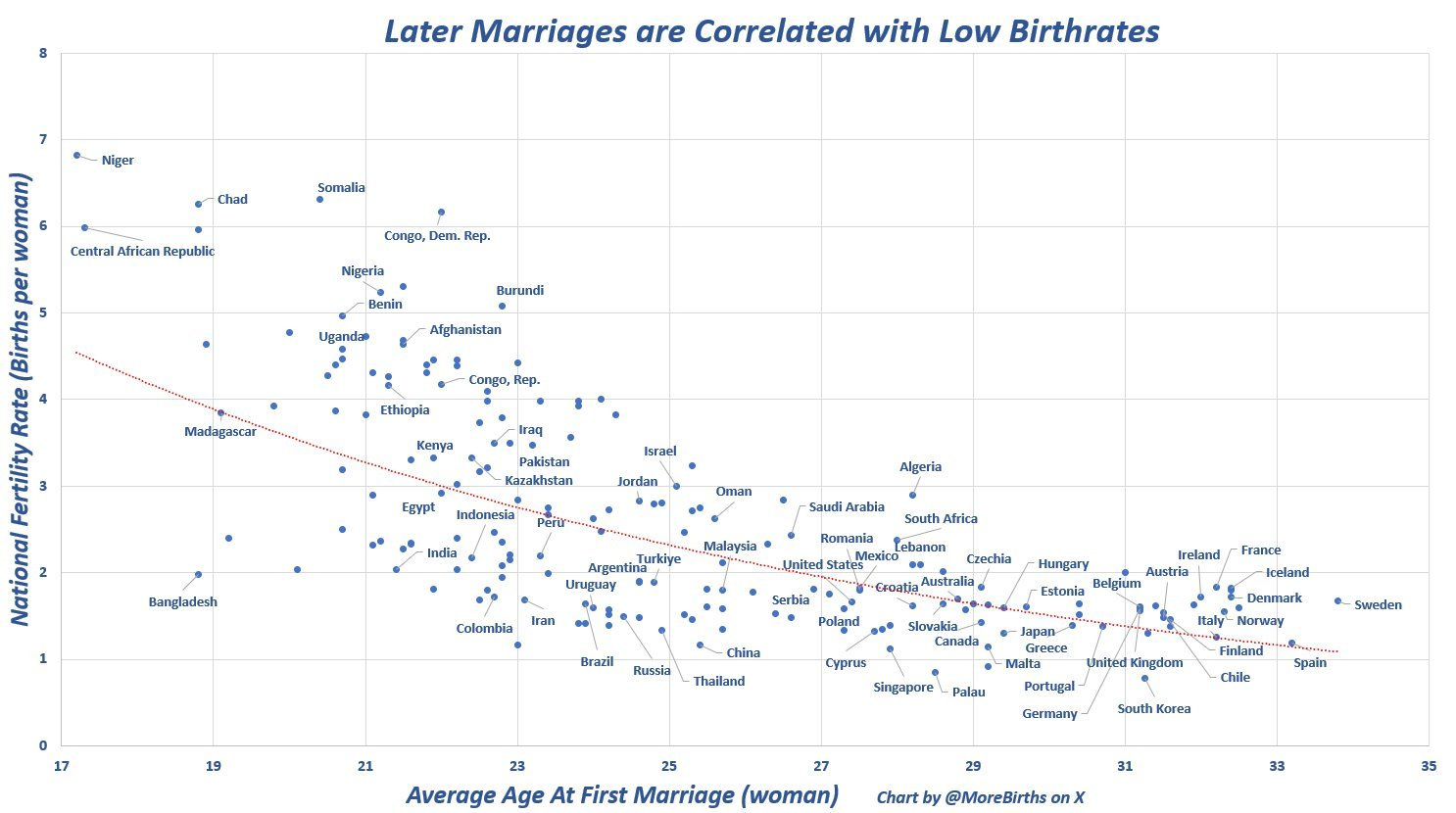
Remember that fecundability chart from Spears et al. If you want to have healthy fertility, it matters a lot if the peak of that curve matches with when people get married.
Earlier Marriage Gave Us the Baby Boom
A lot of people have tried to explain the mid-century Baby Boom via rising prosperity in that era. But then why didn’t birthrates go up in all the other eras when people got richer? Actually, one aspect of rising postwar prosperity did lift birthrates, and that was the explosion of suburbs and single-family homes.
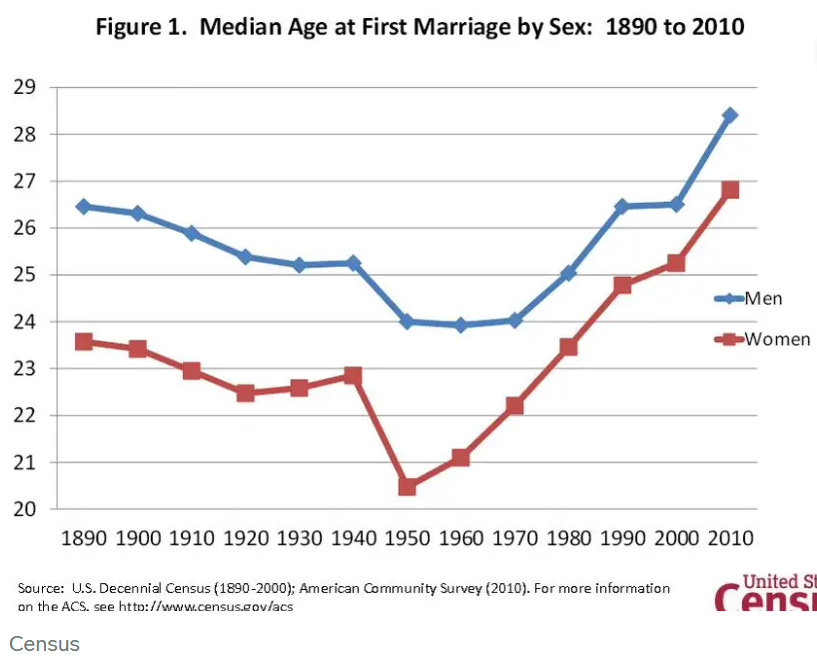
But the biggest cause of the great Baby Boom is that people got married a lot younger in that era than ever before. When marriage overlapped with high youthful fecundity, more children came easily.
IVF Doesn’t Fix Delayed Fertility
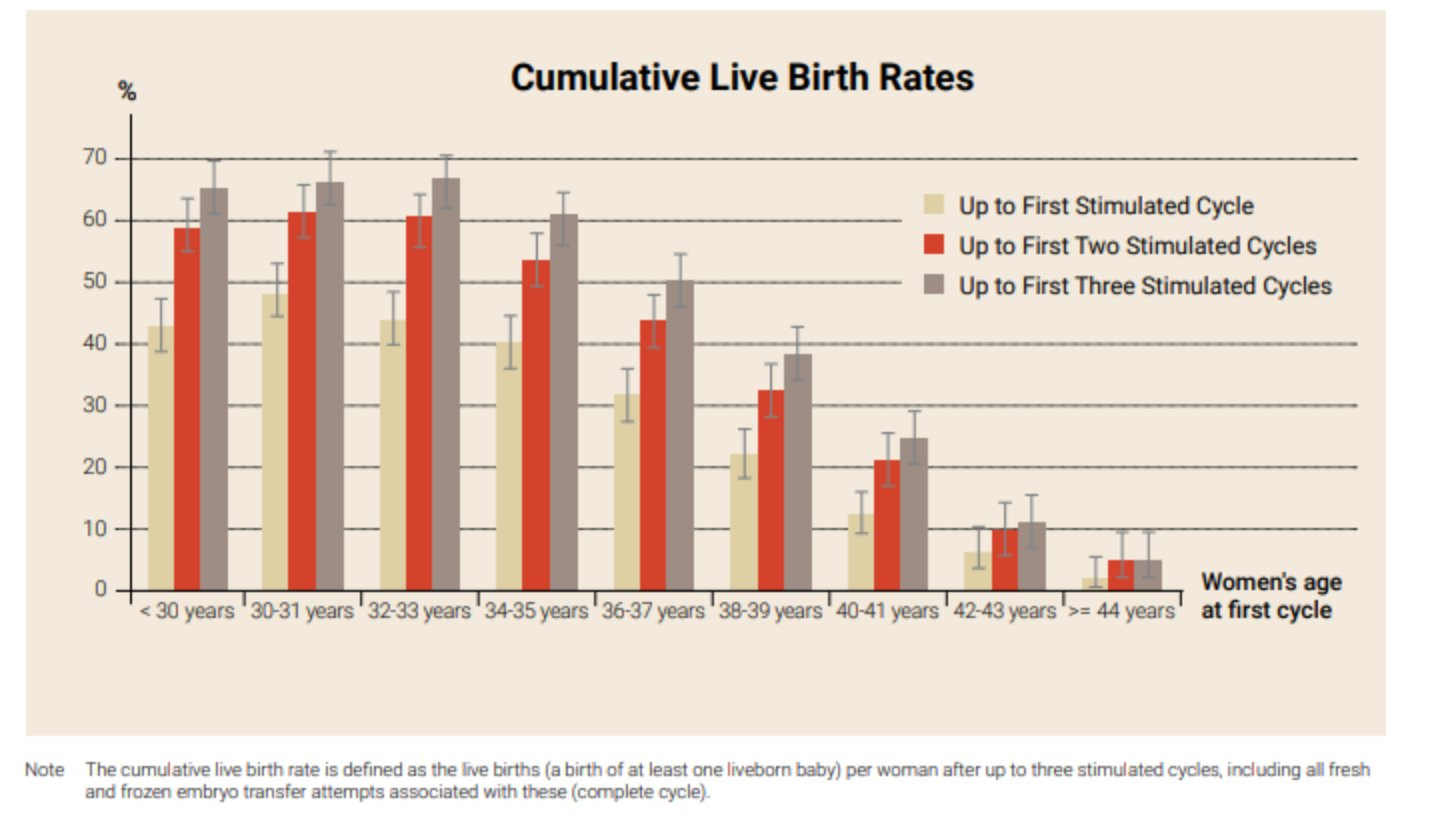
A lot of people are under the impression that in-vitro fertilization (IVF) will fix the problem of age-related fertility decline. IVF is a remarkable technology, and it can do wonders for women under 35.
But the success of IVF drops off with age exactly like women’s fertility generally and a woman aged 44 has less than a 5% change of live birth after three simulated cycles.
The age of a woman’s eggs is the limiting factor here. Geneticist Ruxandra Teslo explains on her blog, “Cohesin [in the eggs] acts like a glue, holding chromosomes together so that they separate correctly later on. This “glue” is set in place when a female is still in the womb and has to last her entire reproductive life. With age, this “glue” or cohesin seems to weaken, leading to errors in chromosome separation and thus affecting the egg’s health and potential to lead to a successful pregnancy.”
Because of this, IVF can’t do the thing people expect it to do, give older women their fertility back.
Education About Age and Fertility is the Easiest Pronatal Policy
In every developed country, people are having fewer children than they would like, and the biggest reason that they are starting too late.
But most people don’t even know how age and fertility work. Demographer Lyman Stone surveyed women about their fertility knowledge and found that ignorance was the norm.
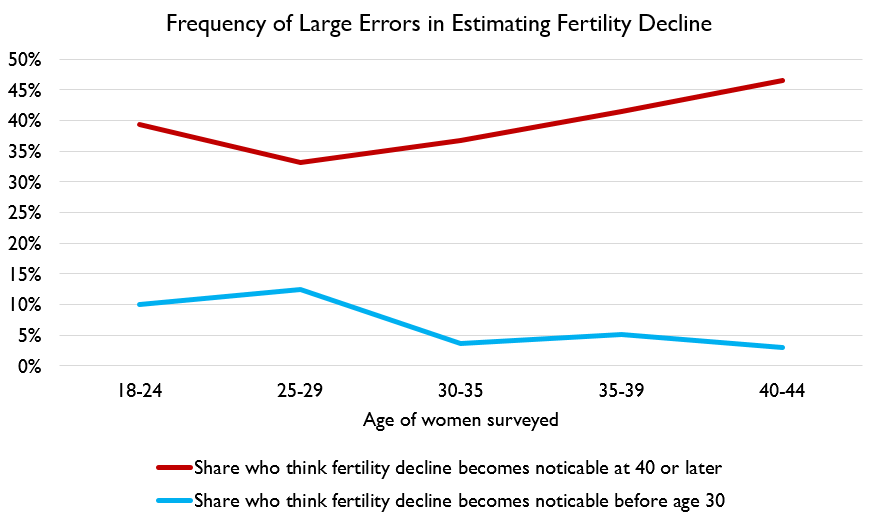
Although fertility drops throughout the 20s, just ten percent of women were aware of that. Nearly half of women thought that fertility decline only becomes noticeable after age 40, but by then fertility is almost gone.
The complete age-fecundability curve, computed by the U.T. Austin team from a sample of 2.8 million women, is shocking and should overturn everything we know about childbearing. Yet hardly anybody knows about it! How differently would young people behave in their 20s if they knew their ability to have children was already rapidly slipping away?
Even most doctors, who are among the best informed about the fertility window, have no idea. Here is the old chart, which suggests, incorrectly, that you lose nothing waiting until your 30s.
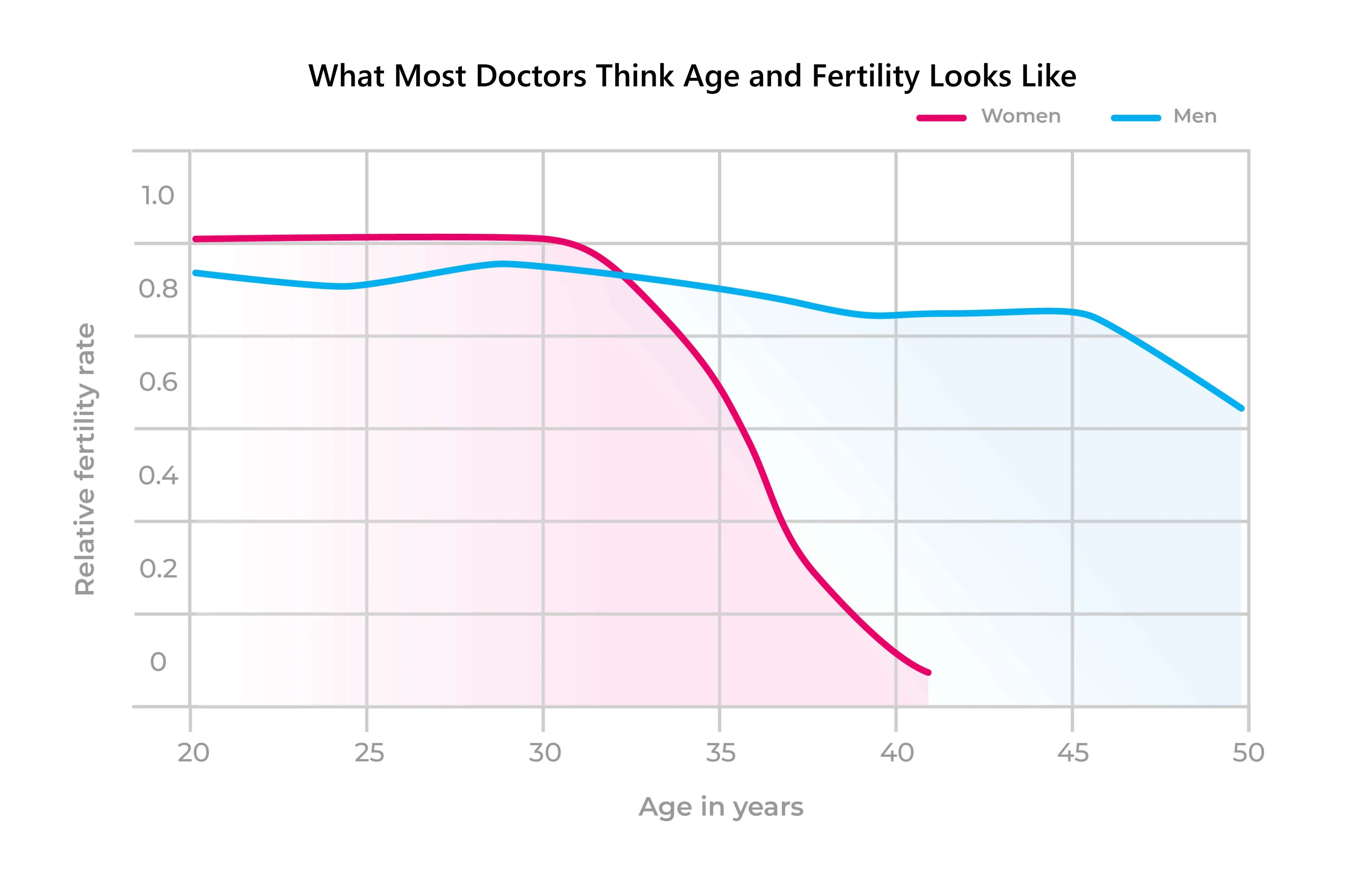
No wonder birthrates are too low.
These facts are sad and promising at the same time. Sad because almost all of us are close to people who wanted to have children but started too late, if that isn’t your own story. Promising because things can go so much better for young people when they learn how the fertility window really works.
Nearly all of ‘sex ed’ in high school is focused on teaching young people how to avoid pregnancy. Yet the biggest risk these days is not unintentional pregnancy but unintentional childlessness.
Demographer Anna Rotkirch shared this chart showing when women should try to have high odds of achieving a desired family size. The short answer is, far earlier than almost any of us thinks.
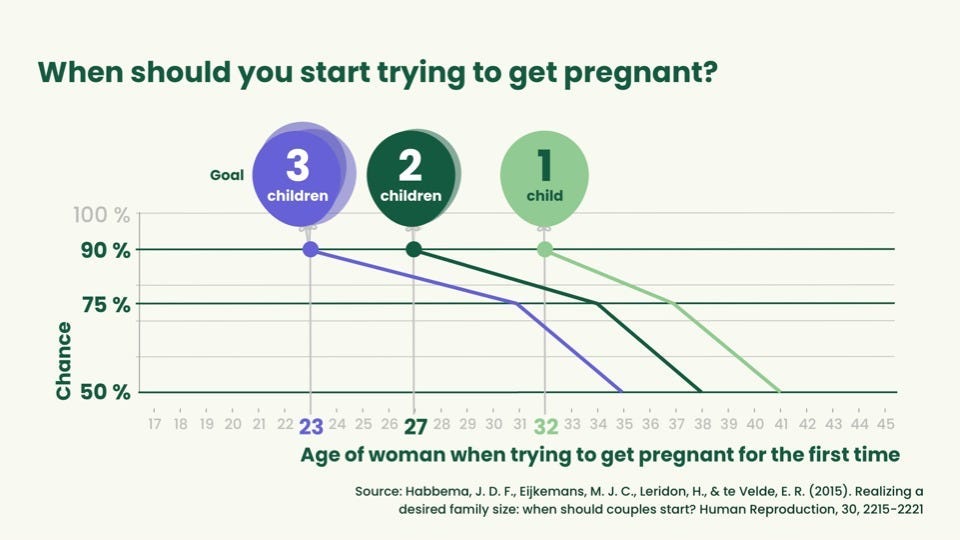
Knowledge, early on, would change everything. Grad school and career development can wait. Getting married and having children cannot.
Every high schooler and college student around the world should be taught these charts. Every ObGyn should be teaching their patients this information. The best way to get birth rates back to where they need to be may well be simple knowledge about age and fertility. Women and men need to know the landscape when they are young, while there is still time to organize their life around the one thing that cannot (so far) be adjusted much, the surprisingly short fertility window.
Really eye-opening stuff on cohesin breakdown and chromosome seperation in aging eggs. That biological mechanism is rarely discussed in mainstream fertility convos but it explains so much. I remember when IVF seemed like a magic fix for everything back in grad school, didnt realize the chromosome issue was the limiting factor. Crazy how much we're not taught about basic reproductive biology.
It's not only longer education that is reducing the opportunity to have children. Its the necessity for women to work in order to finance a home. House price inflation has exceeded the growth in wages. In 1908 , in Melbourne Australia, in an arbitration court set up to manage relations between employers and workers, Justice Higgins in the Harvester Judgement set a 'basic wage', a minimum wage for a male that would enable that single worker to support a stay at home wife to look after their family, and it was a large family at that time. Put it down to the rapacity of the economic system that has enabled some to thrive at the expense of others. And this in the context of rapidly increasing productivity due to the use of machines and the availability of many new sources of energy to drive them. And to make that power widely available via the generation of electricity and its distribution via the 'grid'. Still measured in 'horsepower'.
If we want more births we have to enable a man to put a roof over his head for no more than three times his annual income and somehow reorganise society so that people can walk or cycle to work, and kids to school without the use of an automobile.